Insulin Safety at the Point of Dispense
A substitution decision made without full clinical context can put a patient at real risk. Navigating Diabetes Care was built to close that gap.
Where a substitution decision becomes a patient outcome.
HIO pharmacists sit at the point where insulin prescriptions become patient outcomes, and where a substitution decision made without full clinical context can put a patient at real risk. Working with HIO's medical supply team, we identified a knowledge gap that had not been formally addressed: how insulin types differ, when substitution is clinically safe and when it is not, and how insulin protocols differ between Type 1 and Type 2 diabetes.
Standard pharmacist training in Egypt does not cover this ground with the specificity that patient safety demands. The gap sat quietly at the dispensing counter, the last checkpoint before a prescription becomes what a patient actually takes.
Designed around the real gap, not around available content.
Four decisions defined how Navigating Diabetes Care works, from a gap analysis with HIO's own team to a curriculum shaped by the pharmacists asking the questions.
Gap analysis with HIO's medical supply team
We ran the gap analysis directly with the internal function that sees where substitution decisions actually happen, and where they go wrong.
A questionnaire built from real concerns
From that analysis we built the pre-training questionnaire that mapped every pharmacist's specific concerns before the wave: not an assumed gap.
Questions routed to the speakers
Pharmacists' own clinical questions were collected and routed to the professors, so the curriculum answered what the audience actually needed to hear.
A curriculum built on specificity
The pharmacist's role in diabetes, T1DM in children and adolescents, insulin types, glucose monitoring, nutrition, and T2DM diagnosis, classification, and management.
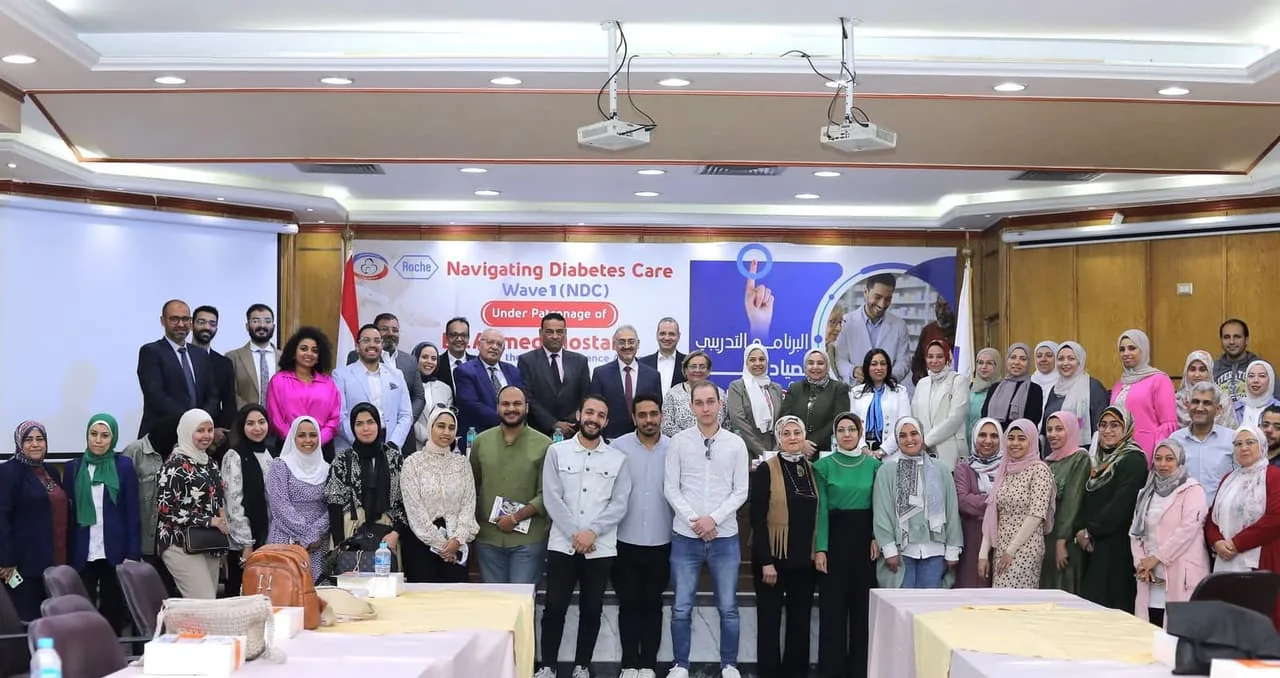
Delivered under the patronage of the Health Insurance Organization, the same institutional weight behind every HIO pharmacist in the room.
One substitution decision. Four clinical checkpoints.
Built as a decision tree, not a lecture list.
The curriculum was structured around the actual decision a pharmacist makes at the counter: is this substitution safe, and does the protocol change if the patient is T1DM or T2DM? Insulin types, glucose monitoring, and nutrition sit around that central decision: not as separate topics, but as the inputs that determine the answer.
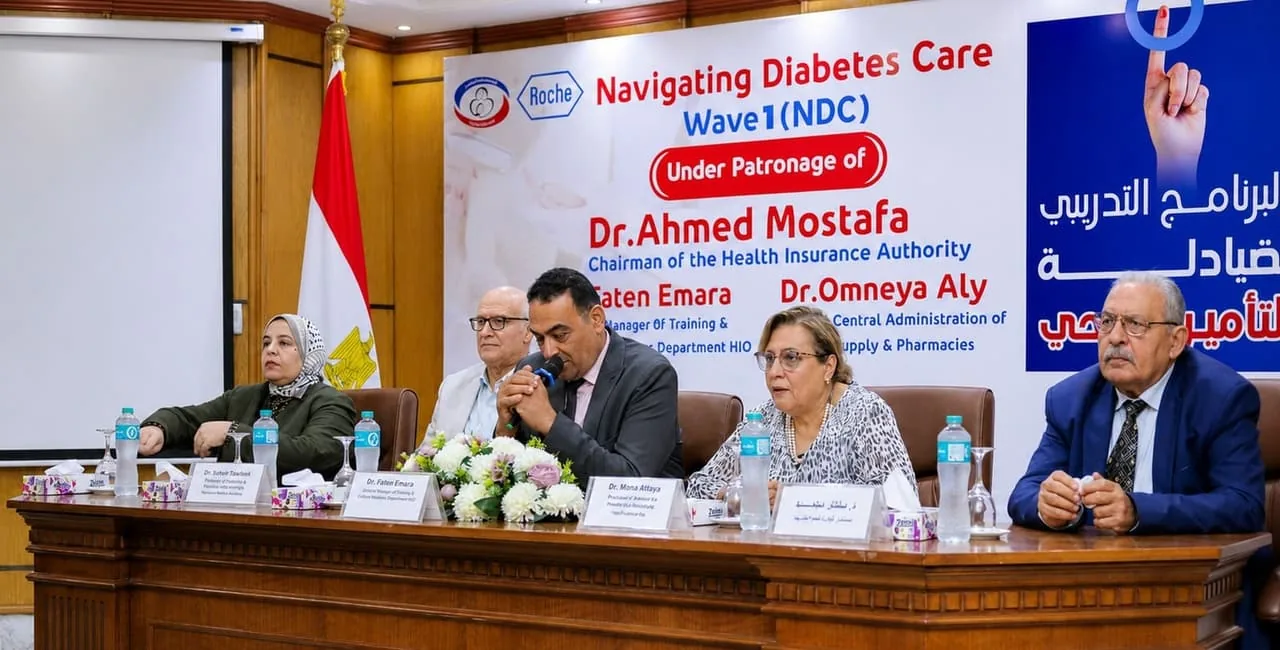
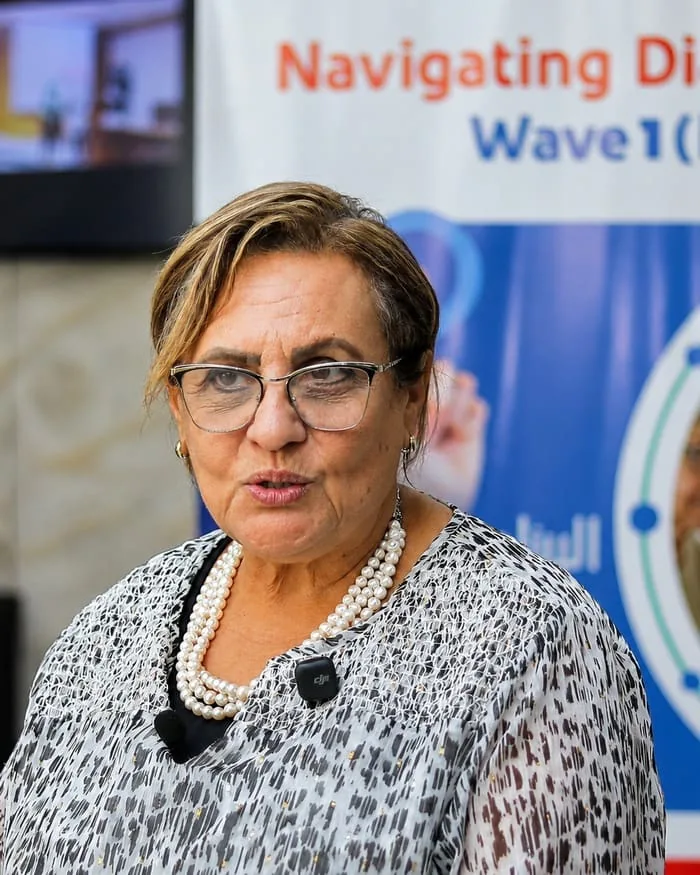
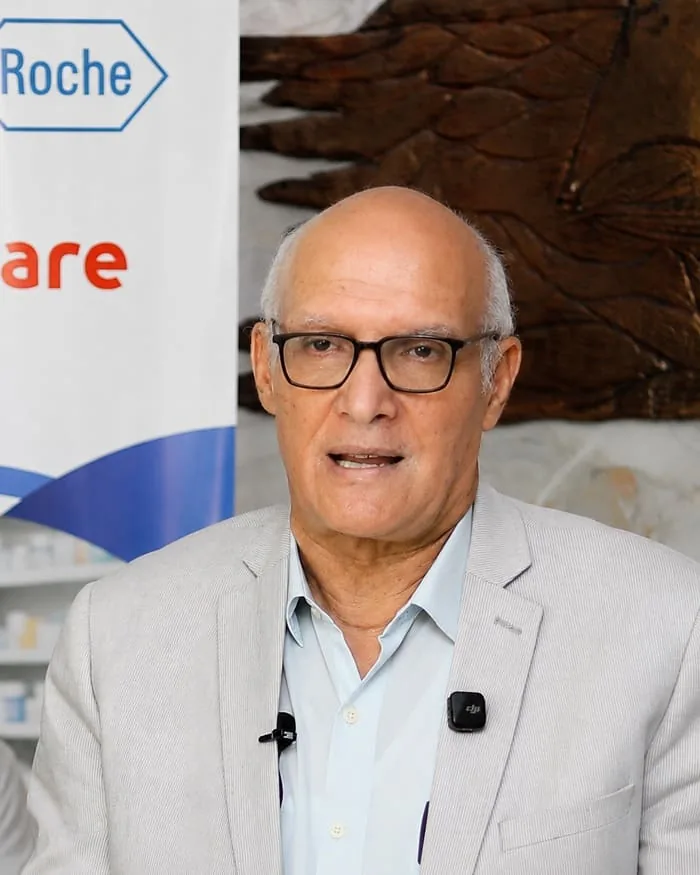
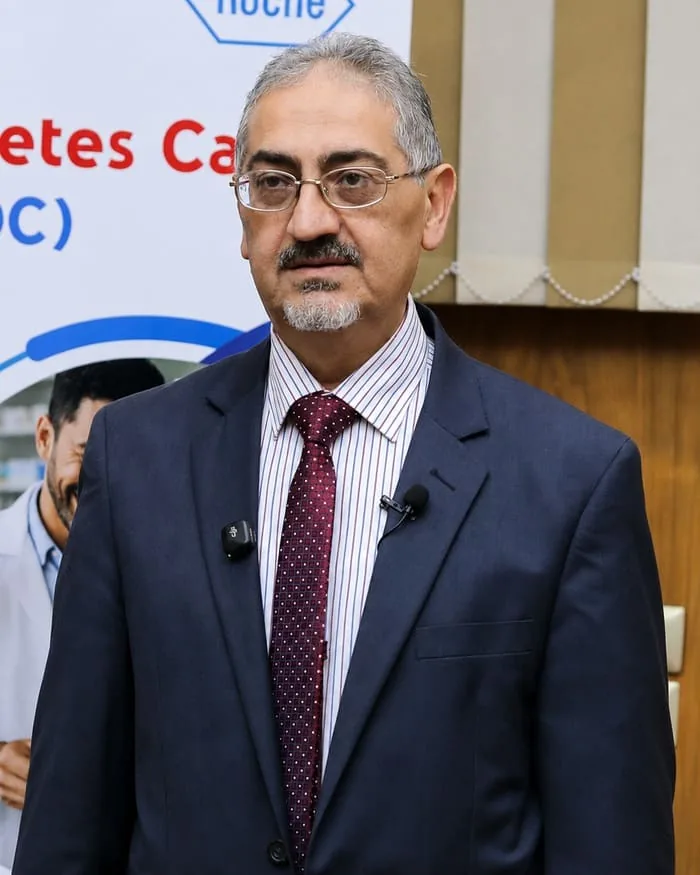
The speakers, Prof. Mona Atteya, Prof. Sameh Tawfik, and Prof. Mohamed Reda Halawa, walked pharmacists through each checkpoint using the questions the audience had submitted before the wave, so every session answered a real concern from the floor of an HIO diabetes center.
Pre-Training Questionnaire
Built with HIO's medical supply team, mapped every pharmacist's specific concerns before the wave.
Professor-Led Sessions
Three speakers answered the submitted questions directly, same specificity the gap analysis demanded.
A gap not previously closed at this level.
Same assessment instrument, pre-training and post-training, Navigating Diabetes Care's first wave delivered specificity Egypt's standard pharmacist training does not provide.
Consistent baseline for HIO pharmacists on insulin substitution and T1DM vs T2DM protocols, measured on the same instrument used post-training.
Post-training improvement on the same MCQ instrument, pharmacists leave with applied insulin-safety judgment, not just protocol recall.
The program remains open for expansion across additional HIO training centers beyond Wave I.
A foundation program for HIO pharmacists on insulin safety.
A foundation program for HIO pharmacists on insulin safety, delivered at the Elmokatam HIO Training Center under HIO patronage.
Sponsor, patronage, and the speakers in the room.
Named credit, because the credibility of a specificity-first program lives in who built it and who taught it.
Corporate Sponsor & Institutional Partner
Professor Speakers — Who Taught the Program
Chairman of the Health Insurance Organization
With the General Manager of the Training & Cultural Relations Department, and the Head of the Central Administration of Medical Supply & Pharmacies.
Four principles the next capability program can inherit.
The reusable pattern, what Navigating Diabetes Care makes true for the next specificity-first HCP engagement Roadmap builds.